
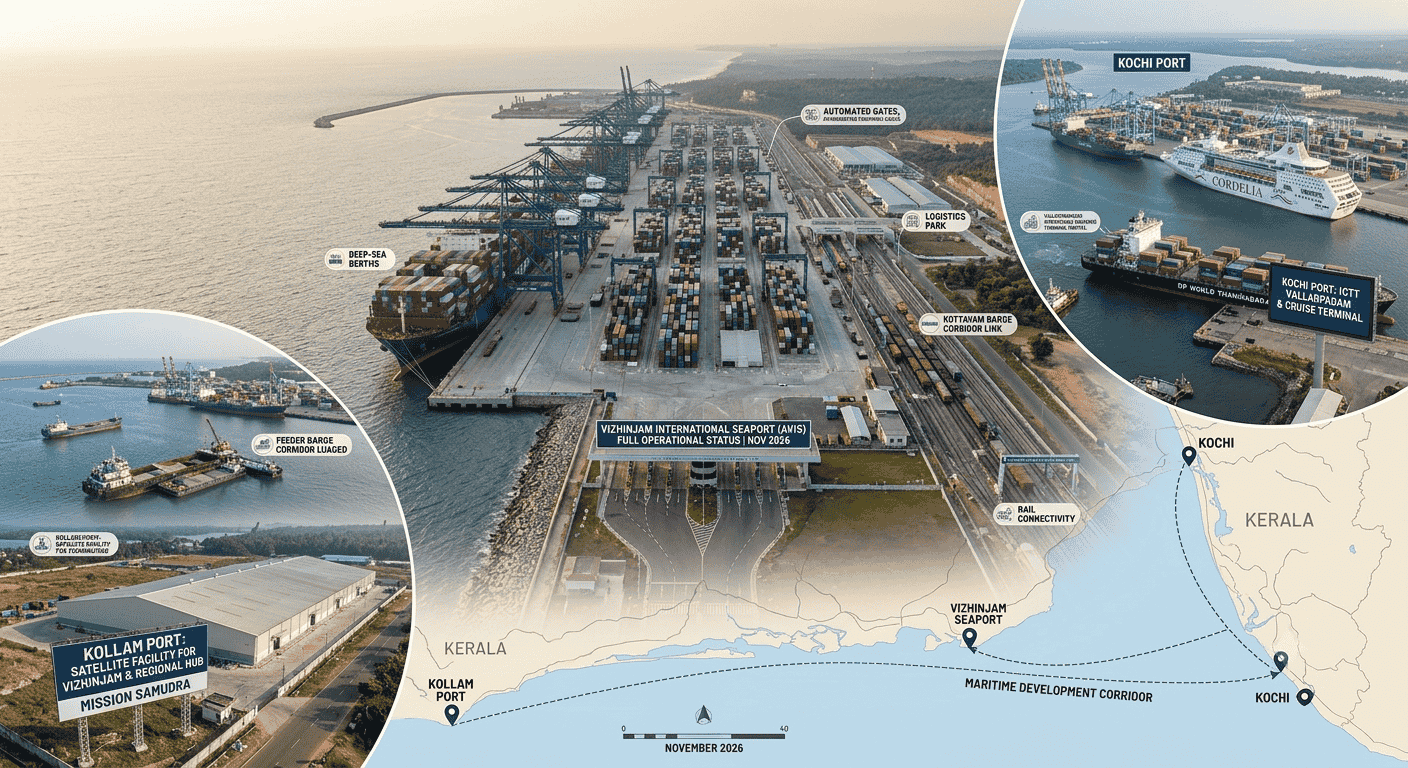
The maritime industry in the state of Kerala will be experiencing an interesting period in 2026, with many changes in international shipping, cargo movement, and port development. This includes the arrival of the first import container at Vizhinjam International Seaport and the development plans of Kollam Port as a satellite port, among others. All of these changes are predicted to generate more trade, logistical operations, tourism, and business opportunities in the region. For those interested in the latest news on the state’s ports and maritime development, Keralaport brings you all that information.
1. Vizhinjam Port Receives Its First Import Container
One of the biggest developments in Kerala’s maritime industry during November 2026 is the arrival of the first direct import container at Vizhinjam International Seaport.
On October 31, 2026, Vizhinjam received its first import container aboard the vessel MSC Sabrina III. The container arrived from Ningbo, China, carrying engineered building boards for the construction sector. This milestone follows the commencement of direct Export-Import (EXIM) operations at the port on August 18, 2026.
Previously, businesses in Kerala often depended on other ports for certain import and export activities. With direct import operations now beginning at Vizhinjam, goods can be unloaded, cleared through customs and transported directly to local markets.
The port has also recorded its first export shipment to Spain, strengthening its international shipping connections.
This development is expected to benefit importers, exporters, freight forwarders and logistics companies across Kerala. It also creates opportunities for local businesses to participate in international trade.
Related reading: Vizhinjam Port First Export Shipment to Spain: A New Chapter for Kerala Trade.
2. Kollam Port Development as a Satellite Facility for Vizhinjam
There have been recent developments regarding the use of Kollam Port as Kerala plans to develop its maritime infrastructure by using more than just international seaports.
In September 2026, the State Government had advanced plans to develop the port as a satellite facility for Vizhinjam International Seaport. This will help in enhancing cargo movement and the efficiency of Kerala’s seaports network.
This plan involves construction of a multipurpose berth facility along with other infrastructures. This project is expected to cost ₹15.15 crore, with ₹7.24 crore to be provided by the Sagarmala program of the Central Government.
A significant aspect is the water depth of the port. This calls for new surveys to know the current depth of water and find out if it is necessary to conduct any dredging.
Apart from cargo operations, the proposal to construct facilities for floating dry dock and cruise tourism have also come up.
These developments, if successful, would enhance the functions of the port in respect of coastal transport and tourism.
Related reading: Kollam Port Multi-Purpose Berth Project: What It Means for Kerala Trade.
3. Kochi Port Sees Improvement in Vallarpadam Rail Connectivity
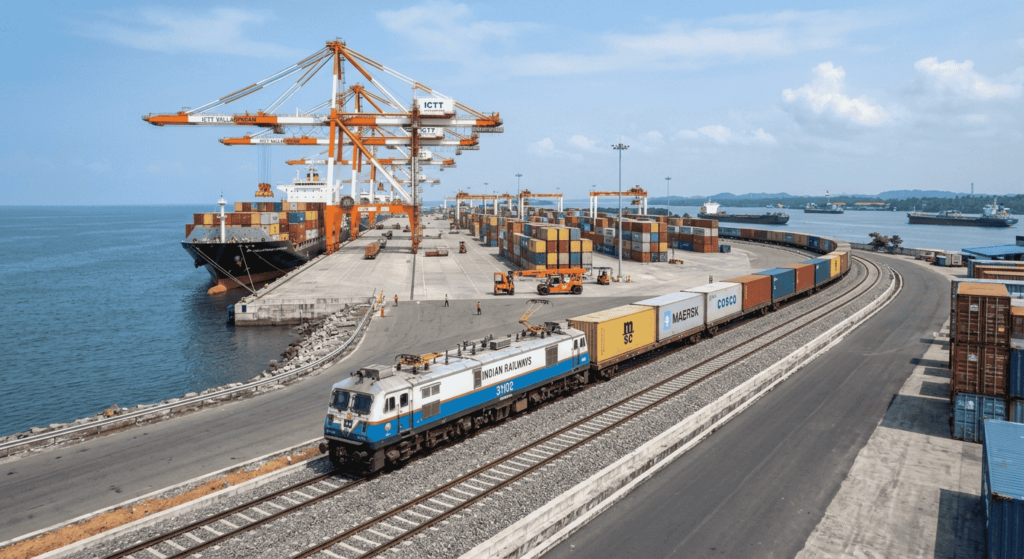
Kochi continues to play an important role in Kerala’s shipping and logistics industry. One of the notable recent developments is the improvement in container transportation through the Vallarpadam International Container Transshipment Terminal (ICTT).
The 8.86-kilometre rail corridor connecting Vallarpadam with the wider railway network has faced underutilisation for several years. However, container rail movement has gradually improved, with at least two rakes operating every month since May 2026.
Another important development is the commencement of outward container loading at the terminal. Bharat Petroleum Corporation Limited (BPCL) has also transported four full rakes of bitumen consignments through this facility.
These developments indicate renewed interest in rail-based cargo transportation through Kochi Port.
Improved rail connectivity can help businesses move goods more efficiently between ports, industrial locations and inland markets. It may also strengthen Kochi’s position as an important logistics centre in South India.
4. Cochin Port Focuses on Capacity Expansion and Green Initiatives
Beyond rail connectivity, Cochin Port is also focusing on infrastructure modernisation and sustainable maritime operations.
According to the Ministry of Ports, Shipping and Waterways, Cochin Port handled approximately 38.06 million tonnes of cargo during the 2025–26 financial year, with 1,214 vessels handled during the period.
The port has an existing handling capacity of approximately 80.5 million tonnes per annum. Future plans aim to increase this capacity to around 98 million tonnes by 2030.
Several infrastructure improvements are also being considered, including berth strengthening, terminal modernisation and additional cargo-handling facilities.
Cochin Port is also adopting greener practices. Electrification of cranes, electric vehicle charging facilities and shore power initiatives are among the measures supporting more sustainable port operations.
These improvements are important as international shipping increasingly focuses on operational efficiency and reducing environmental impact.
5. What These Developments Mean for Kerala’s Maritime Future
The latest developments show that Kerala’s port network is gradually expanding beyond traditional cargo-handling activities.
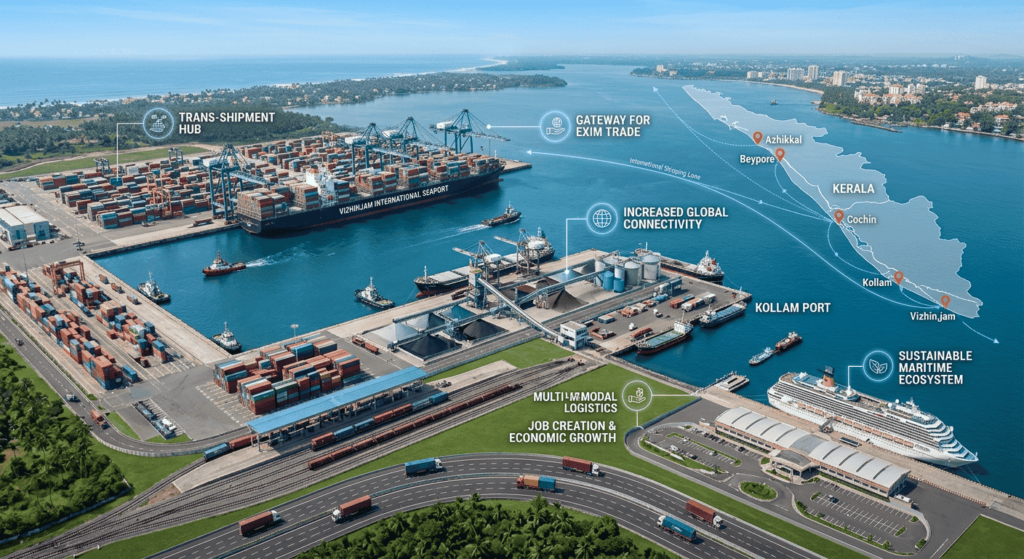
Vizhinjam is strengthening its international EXIM operations, Kollam is preparing for a larger regional role, and Kochi continues to improve its cargo transportation and logistics facilities.
Together, these developments can create opportunities in several areas:
- International trade: Better port facilities can support importers and exporters.
- Logistics and transportation: Improved road and rail connections can reduce cargo movement challenges.
- Employment: Port development can generate opportunities in shipping, warehousing and freight forwarding.
- Tourism: Cruise facilities and coastal infrastructure can support maritime tourism.
- Regional business growth: Better connectivity can help industries access wider domestic and international markets.
However, the success of these developments will depend on timely project implementation, infrastructure investment, environmental considerations and effective coordination between authorities.
Conclusion
In November 2026, some significant milestones would be achieved by the maritime sector of Kerala. The direct import container at Vizhinjam, the satellite development project of Kollam Port and the cargo rail movement at Kochi reflect the new trend emerging in the port sector of the state. With the development of these projects, Kerala may take a strong stand in global trade, shipping, and logistics. Follow Keralaport for more updates on ports, shipping, infrastructure, and maritime activities in Kerala.