
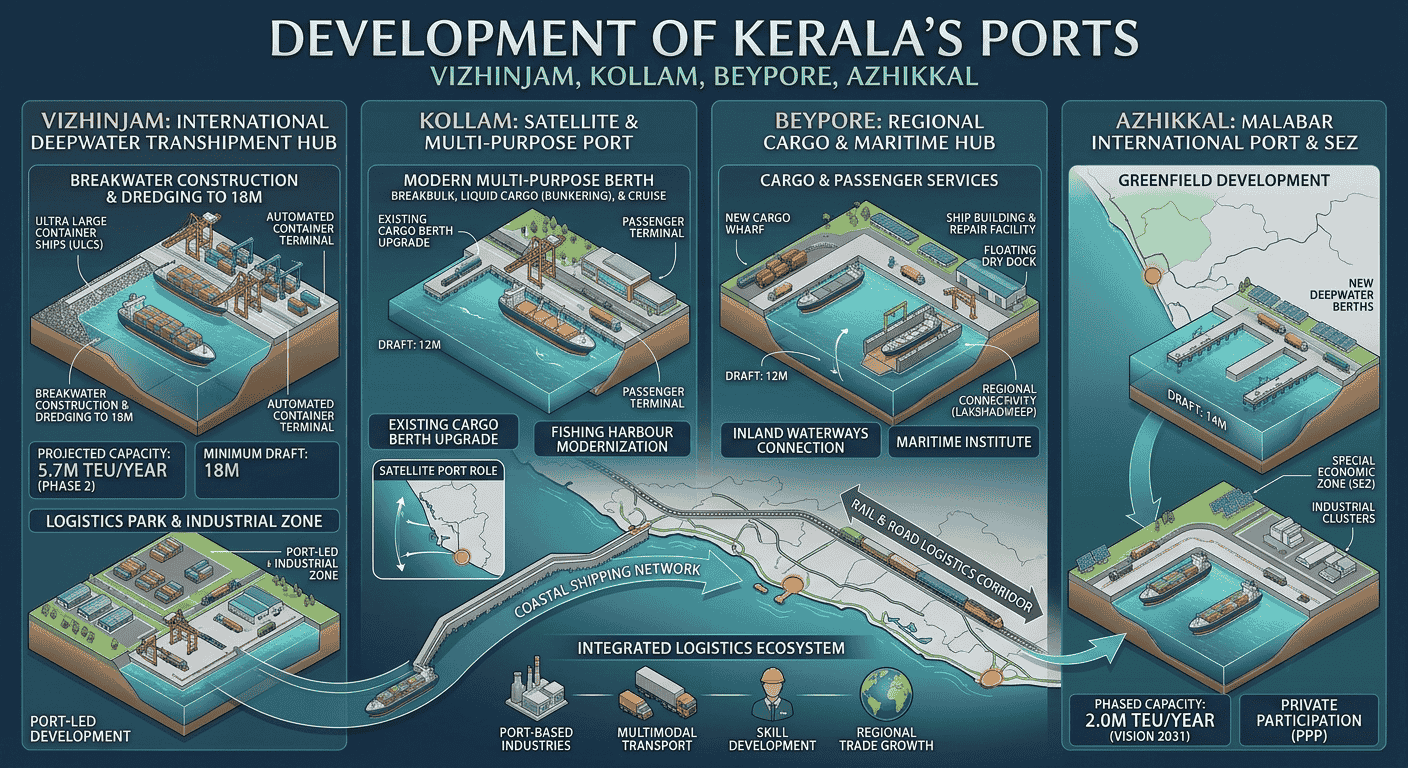
Kerala has a long coastline and a strong connection to maritime trade, fishing, tourism and coastal transportation. In recent years, the development of ports has become an important part of the state’s economic growth strategy. While Vizhinjam International Seaport is attracting global attention, ports in Kollam, Beypore and Azhikkal also have opportunities to support regional cargo movement, logistics and coastal shipping.
The Kerala Minor Ports Development initiative focuses on improving port infrastructure, attracting private investment, strengthening connectivity and creating new opportunities for businesses. In February 2026, the Kerala Cabinet approved the development of Kollam and Beypore ports under the Public-Private Partnership (PPP) model. This reflects the state’s growing interest in modernising its maritime infrastructure.
Keralaport helps businesses, logistics professionals and readers stay updated with the latest news about Kerala’s ports, shipping and infrastructure. Explore our latest port updates to understand the developments shaping Kerala’s maritime future.
Why Is Kerala Minor Ports Development Important?
Kerala’s smaller ports can support the state’s larger maritime network by handling suitable cargo, facilitating coastal shipping and improving access to regional markets. Better port infrastructure may also help reduce pressure on road transport, support local industries and create employment opportunities.
Key benefits include:
- Improved cargo transportation: Efficient port facilities can support the movement of goods between coastal locations.
- Business opportunities: Warehousing, freight handling, shipping services and logistics may attract investment.
- Regional economic growth: Port development can benefit nearby industries, traders and communities.
- Better connectivity: Integrating ports with roads, railways and inland waterways can improve supply-chain efficiency.
According to the Kerala State Planning Board’s Economic Review, Kerala has 17 non-major ports, of which four—Vizhinjam, Kollam, Beypore and Azhikkal—are identified as operational for trade.
1. Vizhinjam International Seaport: Kerala’s Global Maritime Gateway
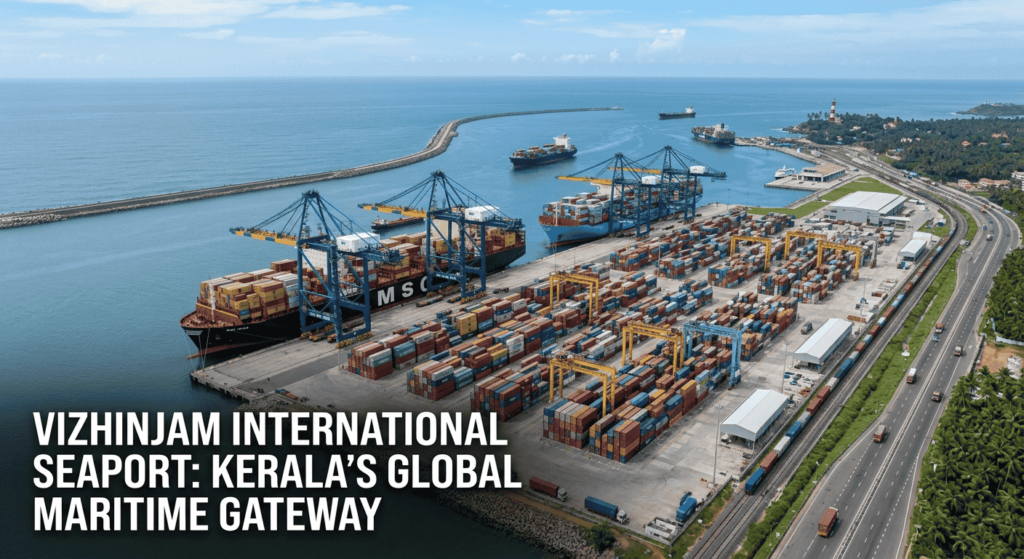
Located near Thiruvananthapuram, Vizhinjam International Seaport is a deep-water container transshipment port positioned close to major international shipping routes. Its geographical advantage makes it suitable for handling large container vessels and connecting Indian cargo with international markets.
The first phase became operational on 3 December 2024, with an annual handling capacity of approximately one million TEUs (twenty-foot equivalent units). According to the Ministry of Ports, Shipping and Waterways, the next combined expansion phase targets completion by December 2028, increasing the designed annual capacity to three million TEUs, with potential to handle up to 5.7 million TEUs through operational efficiencies.
The expansion is expected to strengthen India’s container transshipment capabilities and reduce dependence on foreign transshipment hubs. Improved rail connectivity and port-linked logistics facilities will also be important for moving cargo efficiently beyond the port.
For more information, read our guide to Vizhinjam International Seaport.
2. Kollam Port: Strengthening Regional Trade
Kollam Port has the potential to support coastal cargo movement, maritime services and economic activities in southern Kerala. Its location provides access to regional markets and creates opportunities for businesses involved in transportation, storage and distribution.
A significant development came in February 2026, when the Kerala Cabinet approved the development of Kollam Port under the PPP model through the Kerala Maritime Board. Detailed Project Reports (DPRs) are to be prepared to determine suitable development plans.
The proposed modernisation could improve cargo-handling facilities, attract private-sector participation and support tourism and related maritime activities. However, the expected benefits will depend on project implementation, shipping demand and improved connectivity.
3. Beypore Port: Supporting North Kerala’s Coastal Economy
Located in Kozhikode district, Beypore Port has historical importance in Kerala’s maritime trade. It supports coastal transportation and serves regional commercial needs, including shipping connections with Lakshadweep.
Beypore is particularly important for businesses that depend on the movement of goods between mainland Kerala and island destinations. Improving cargo-handling facilities, operational efficiency and port connectivity could strengthen these services.
The Kerala Cabinet’s February 2026 approval for PPP-based development of Beypore Port is an important step towards exploring further investment and infrastructure improvements. The Kerala Maritime Board is expected to prepare a DPR suited to the port’s specific requirements and development potential.
Future progress will depend on the approved project plans, investment decisions, cargo demand and the availability of efficient shipping services.
4. Azhikkal Port: Developing North Kerala’s Maritime Potential
Azhikkal Port, located in Kannur district near the confluence of the Valapattanam and Mattool rivers, serves the surrounding industrial and commercial region. Its existing activities and hinterland connections offer opportunities for future cargo and coastal shipping development.
The port’s regional economy includes industries associated with plywood, timber, tiles, coir, cashew and other products. Better infrastructure could help these businesses access more efficient transportation and broader markets.
Kerala’s long-term development plans include the proposed Malabar International Port and SEZ project at Azhikkal. The project envisages a larger international and coastal shipping facility supported by logistics infrastructure and industrial development.
According to the official project overview, the project is planned in phases, with an estimated total cost of ₹5,047 crore based on a 2022 assessment. The government approved the Detailed Project Report and financial model in November 2025, according to the Kerala State Planning Board’s Economic Review 2025.
The proposed development could strengthen North Kerala’s access to maritime trade, although its progress depends on the necessary approvals, investment and execution of the project.
Challenges and Future Opportunities
Despite their potential, Kerala’s smaller ports face challenges such as limited cargo volumes, infrastructure requirements, investment constraints and the need for reliable shipping services.
Public-private partnerships may help attract investment, improve operational efficiency and introduce specialised port services. However, successful development also requires suitable cargo demand, efficient customs procedures, better road and rail links, and coordination between government agencies and private operators.
Connecting ports with warehouses, industrial areas and inland transport networks will be essential to making maritime transportation commercially viable. Environmental safeguards and the interests of coastal communities must also remain part of long-term planning.
Conclusion
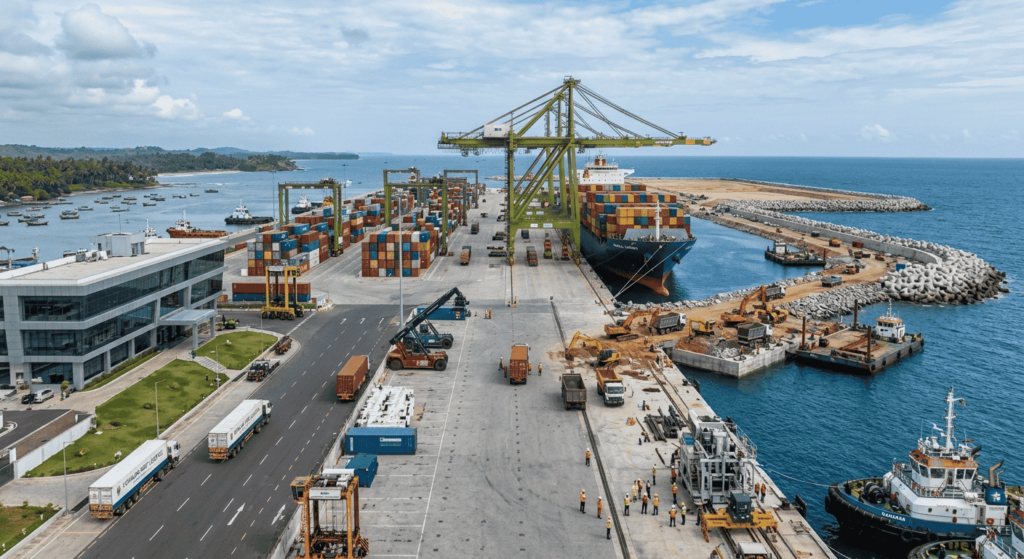
The development of Vizhinjam, Kollam, Beypore and Azhikkal demonstrates the different roles that ports can play in Kerala’s maritime economy. Vizhinjam is expanding its international container-handling capabilities, Kollam and Beypore are moving towards planned PPP-based development, and Azhikkal has long-term potential for a larger port and industrial ecosystem.
The success of Kerala Minor Ports Development will depend on turning plans into functioning infrastructure, attracting investment and creating stronger connections between ports and regional businesses. Together, these developments could support trade, employment and more efficient cargo transportation across the state.
Stay informed with Keralaport! Visit Keralaports.com for the latest news, port development updates and insights into Kerala’s shipping, logistics and maritime infrastructure. Follow our updates to understand new opportunities and important changes in Kerala’s port sector.