
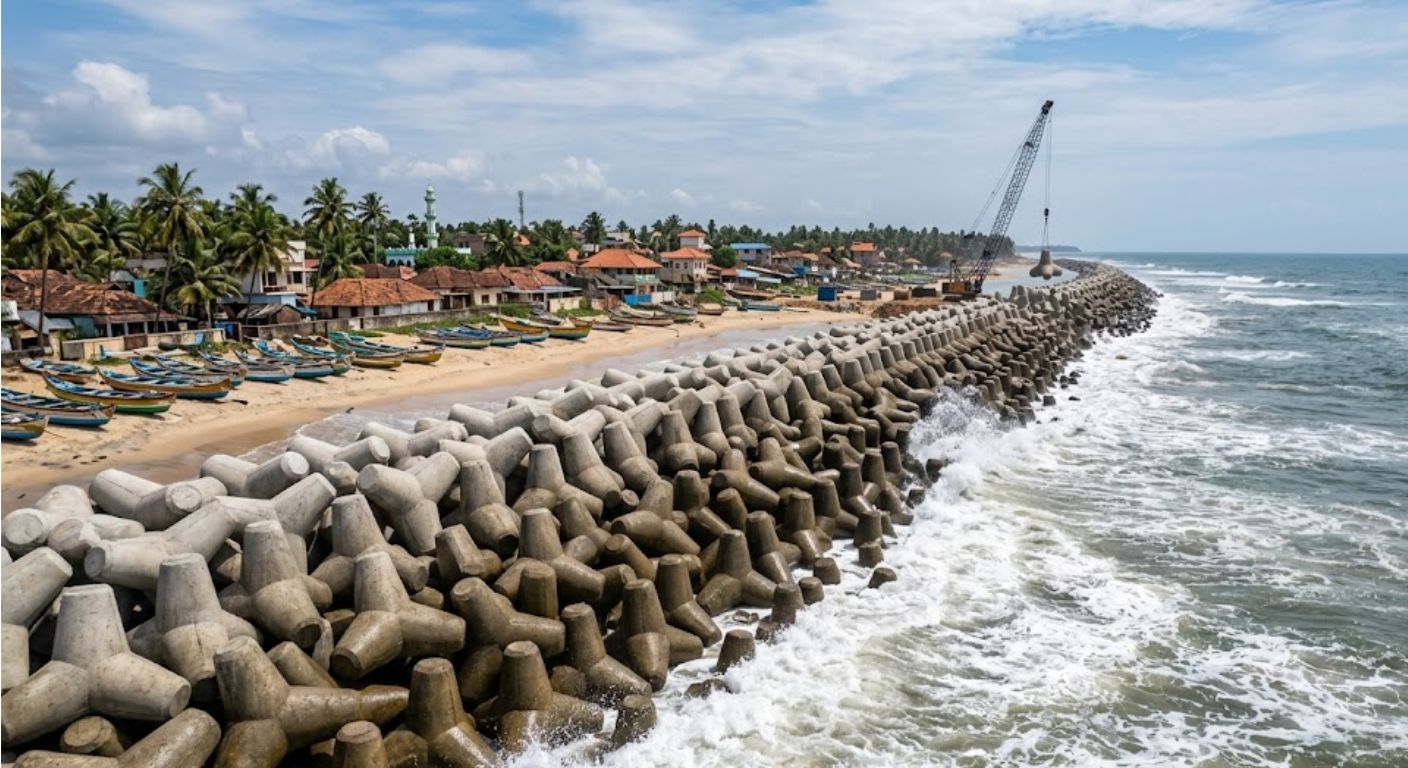
The coastal region of Kerala, which is characterized by beautiful scenery and heavily populated communities, is now under great environmental danger due to sea erosion. Places in Thiruvananthapuram, such as Poonthura, have been affected by erosion at a very concerning rate.
To address this growing concern, the Kerala government introduced an innovative solution — the Poonthura Geotube Project. But the key question remains:
Understanding Coastal Erosion in Kerala
The coastline in Kerala is one of the most erosion-prone coasts in India. Statistics reveal that nearly 45%-50% of the coast is highly vulnerable, which poses severe concerns for the environment and economy alike.
Some of the major factors are:
- Elevation of sea levels owing to climate change
- Powerful waves caused by the monsoons and storms
- Human activities such as constructing ports and sand mining
- Destruction of natural coastal buffers like mangroves
Erosion, for coastal areas, is not merely an environmental problem but also one that impacts their economy.
What is the Poonthura Coastal Protection Project?
The Poonthura Project is a pilot coastal defense initiative based on geotube technology, designed to reduce wave impact and rebuild beaches naturally.
Project Highlights:
- Location: Poonthura–Shanghumugham coastal stretch
- Estimated Cost: ₹20 crore
- Initiated: Around 2022
- Expected Completion: 2026
- Implemented by Kerala State Coastal Area Development Corporation
- Supported by National Institute of Ocean Technology
The project involves placing offshore geotube barriers along the coastline to act as breakwaters and reduce wave energy.
How Geotube Technology Works
Geotubes are large, sand-filled tubes made from durable fabric, placed strategically in the sea.
How it works:
- Incoming waves hit the geotubes first
- Wave energy is significantly reduced
- Sand begins to accumulate behind the tubes
- Over time, the beach stabilizes and rebuilds
This method is gaining attention because it is:
- Environment-friendly
- Cost-effective
- Less disruptive compared to traditional seawalls
Latest Update (2026): Current Status
As of 2026, the project has entered a crucial phase:
- A major portion of the work has already been completed
- Final phases are underway, with completion expected soon
- The upcoming monsoon season will act as the real performance test
Interestingly, platforms like Keralaports play a key role by helping businesses and professionals stay updated with the latest developments in Kerala’s ports and coastal infrastructure, including projects like Poonthura that directly impact regional growth.
Challenges Faced by the Project
Despite its potential, the Poonthura project has faced several challenges:
1. Material and Supply Issues
- Delays due to sourcing of geotube materials
- Shift from imported to domestic products
2. Harsh Marine Conditions
- Construction limited to calm sea conditions
- Frequent weather interruptions
3. Local Community Concerns
- Fishermen raised concerns about fishing disruptions
- Authorities engaged in discussions to ensure minimal impact
Advantages of the Poonthura Project
The project offers several long-term benefits:
Sustainable Coastal Protection
Works with natural processes instead of blocking them
Natural Beach Formation
Encourages sand accumulation and shoreline recovery
Eco-Friendly Approach
Reduces damage to marine ecosystems
Scalable Model
Can be implemented across other erosion-prone areas
For businesses, investors, and policymakers tracking such developments, Keralaports serves as a reliable platform to stay informed about how these coastal protection initiatives influence port operations and infrastructure planning.
Can It Really Stop Sea Erosion?
Here’s the realistic perspective:
The project may not completely stop sea erosion, but it can significantly reduce its impact.
Why complete prevention is difficult:
- Coastal erosion is a natural and ongoing process
- Influenced by multiple environmental factors
However, the Poonthura project can:
- Reduce wave force
- Slow down shoreline erosion
- Stabilize coastal regions
- Protect vulnerable communities
Early observations suggest improved sand accumulation in certain areas, indicating promising results.
What This Means for Kerala’s Future
If successful, the project could transform Kerala’s coastal management strategy.
1. A Model for Future Projects
Could be replicated across Kerala and other coastal states
2. Support for Port Development
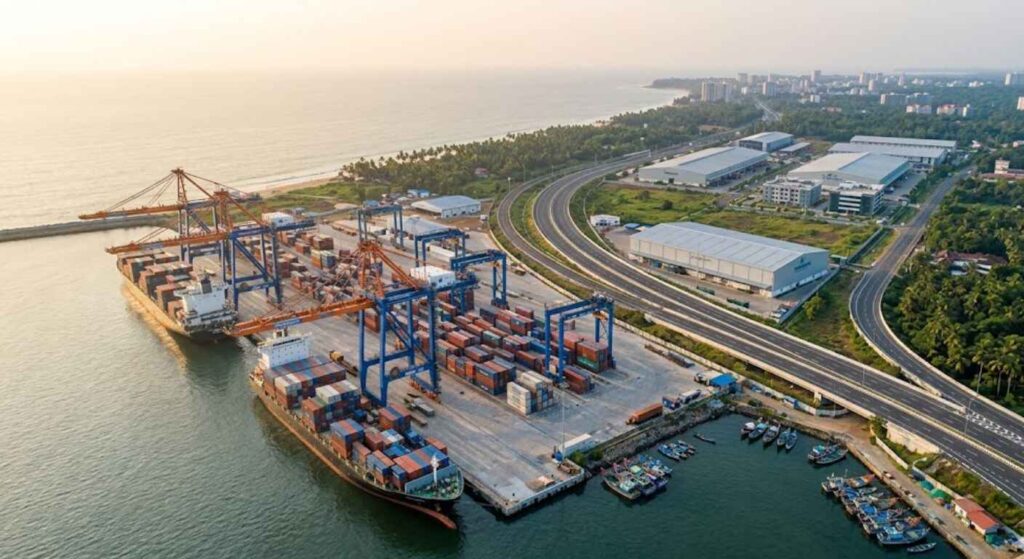
Stable coastlines are essential for projects like Vizhinjam International Seaport
3. Protection for Coastal Communities
Ensures safety for thousands of families
With increasing focus on coastal infrastructure, platforms such as Keralaports continue to play a vital role in delivering timely insights that help stakeholders understand the broader impact of such developments.
Conclusion
Kerala’s fight against sea erosion is about to enter an entirely new era through its Poonthura Geotube Project, which although it may not prevent erosion, does provide an innovative and sustainable solution to an age-old issue.
As 2026 becomes a crucial year, the success of this project will decide the viability of geotubes as a sustainable defense mechanism against erosion in the coming years.
Follow Keralaports to stay ahead with real-time updates on ports, coastal infrastructure, and emerging developments across Kerala.