
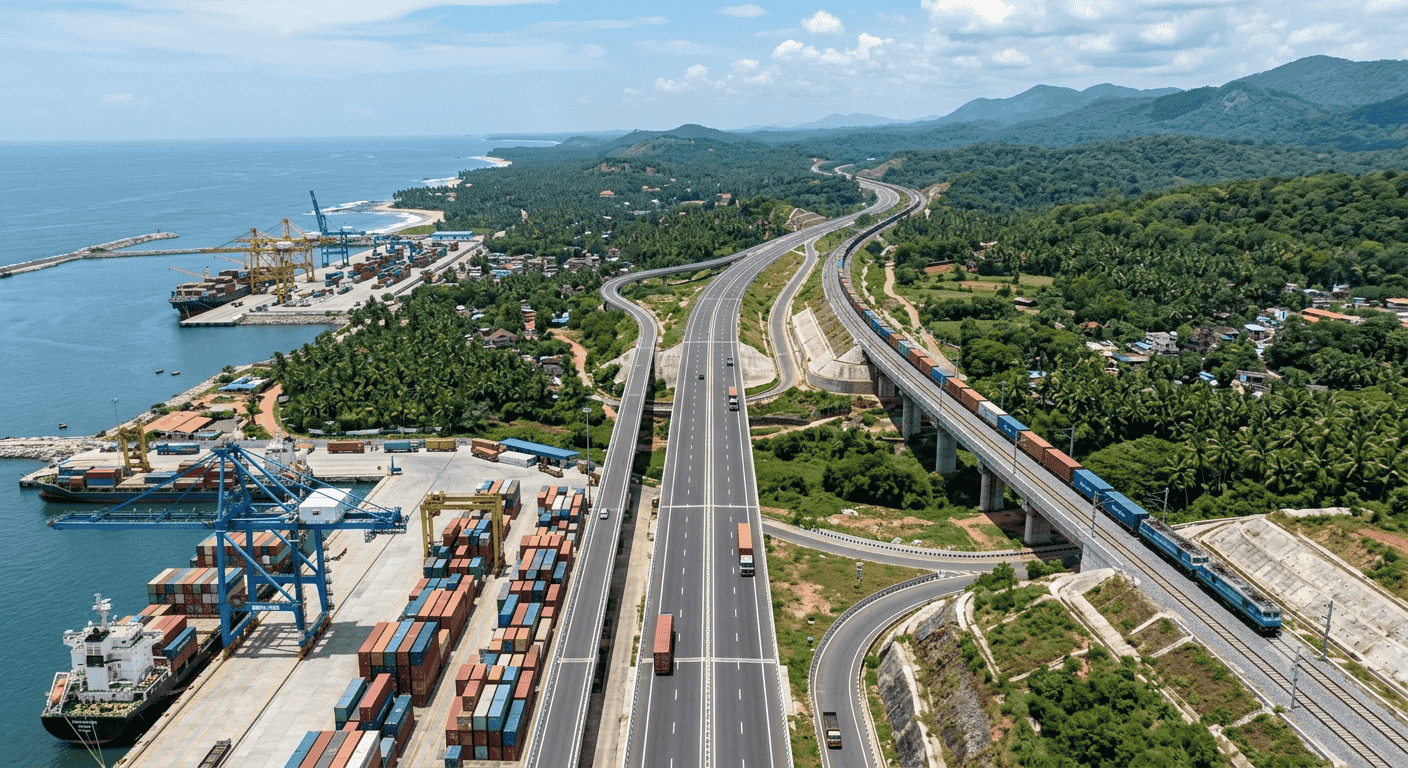
The EXIM cargo services launched in August 2026 have marked the entry into the next stage of development of Vizhinjam International Seaport. Not only transshipments, but also export and import cargo is starting to be handled at the port. As a result, there is increasing importance of transporting containers from the port to other locations such as industries, storage facilities and logistics facilities.
Having access to a deep-sea port is just the first step for exporters and importers. Vizhinjam Port connectivity will be one of the factors that will determine the effectiveness of further cargo transportation outside the port boundaries to different regions in India.
Keralaport provides companies and logistics specialists with updates on developments in the ports of Kerala and India.
Why Hinterland Connectivity Matters for Vizhinjam Port
A port can handle large vessels efficiently, but cargo must still travel inland after it leaves the terminal. This is where hinterland connectivity becomes important.
For EXIM cargo, the logistics chain can involve several stages:
Vessel → Port → Container terminal → CFS/Warehouse → Road/Rail → Factory or Distribution Centre
If any stage is delayed, the overall supply chain can become slower and more expensive.
The importance of first- and last-mile connectivity is also recognised under India’s broader port-connectivity programmes, which focus on connecting ports with economic centres through road, rail and other transport modes.
Vizhinjam’s Road Connectivity Is Important for Immediate Cargo Movement
It is currently significant in connecting the hinterland of Vizhinjam, especially as the gateway EXIM facilities are established.
The port has connectivity through NH 66, but the establishment of high capacity connections and the related infrastructure are yet to take place. In recent reports, the problem in terms of road and rail connectivity has come into focus with the growth in Vizhinjam’s gateway cargo operations.
In case of containerized cargo, road connectivity influences:
- Truck turnaround time
- Fuel consumption
- Delivery schedule
- Connectivity to warehouses
- Movement from the port to the industrial zones
- Inland transportation costs
A good road network, thus, becomes critical for exporters requiring a regular delivery schedule.
Rail Connectivity Can Strengthen the Hinterland Network
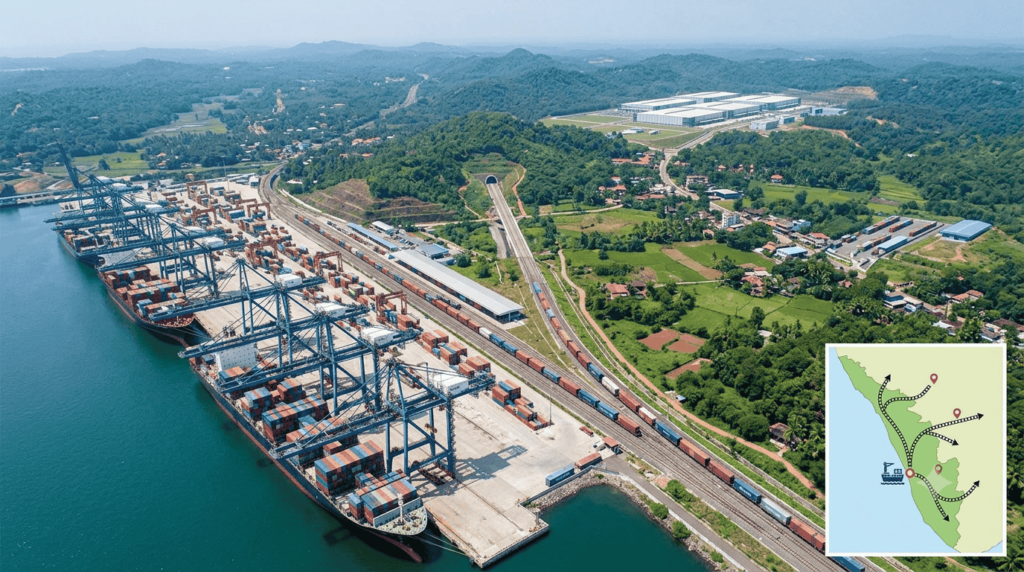
The mere construction of roads might prove insufficient as the volume of container traffic increases. Rail connectivity might offer an alternative way of transporting increased volumes of goods from Vizhinjam to the national railway network.
The proposed link between Vizhinjam and Balaramapuram via rail will allow connecting the port with the railway station at Balaramapuram. The project currently envisages constructing an extensive underground tunnel as part of the rail network.
With the help of rail connectivity, it will be possible to transport the containers both to and from inland logistics centers, warehouses, and industrial zones.
The issue will acquire particular importance in case the port grows into the wider EXIM gateway.
Why Last-Mile Logistics Is Critical for EXIM
The last leg of transport for cargo could be considered just one aspect of the whole supply chain but could have a direct bearing on delivery times and logistics costs.
Take the case of an exporter situated several kilometres from Vizhinjam. Even if the container gets to the port fast enough, there can be delays in trucking, documentation, containerization or other logistical issues that could impact the whole shipment.
Such as:
Factory → Warehousing/CFS → Vizhinjam Port → International Destination
Having a seamless link between each location can help firms plan their shipments better.
There will also be an expansion of the logistics ecosystem in Vizhinjam, which will include facilities for warehousing and containerization among others. There are plans to build a 100 acre Container Freight Station (CFS).
CFS and Warehousing Can Complete the Logistics Chain
The functions that Container Freight Stations (CFS) could perform to support these activities include cargo handling, inspection, documentation, and consolidation.
It becomes particularly important since the first EXIM operations at Vizhinjam will be conducted under certain circumstances. Cargo movements allowed by the customs clearance will include some FCL cargoes only, but the cargo that needs CFS inspection will be limited until appropriate facilities are available.
With the development of the infrastructure, CFS, warehouses, cold storage, and logistics parks might become very helpful links between the port and businesses.
It becomes particularly relevant for industries such as seafood, agriculture, food products, etc., when delay can negatively impact the cargo condition.
Vizhinjam Port and the Wider Kerala Logistics Network
The impact of Vizhinjam’s connectivity will not necessarily be limited to Thiruvananthapuram.
A stronger road and rail network could connect the port with manufacturing centres, warehouses, exporters and importers across Kerala and neighbouring states.
The recent movement of export cargo illustrates this wider connection. In one early shipment to Spain, cargo from Thiruvananthapuram and Kochi was transported to Vizhinjam by road before being shipped internationally.
This demonstrates how port connectivity and inland logistics work together to create a complete EXIM supply chain.
Which Port Could Suit Different Cargo Requirements?
As Kerala’s maritime network develops, exporters and importers may need to compare factors such as distance, cargo type, transport mode and logistics requirements when selecting a port.
You can use the Vizhinjam vs Cochin Port Selector to compare the two ports based on your cargo and logistics requirements.
The Future of Vizhinjam’s Hinterland Connectivity
Future development in Vizhinjam will not only involve upgrading the capacity of vessels and containers. There will be further developments on the land side in connection with the port development.
These may include:
- Upgrading of NH 66 and roads to the port
- Rail connection between Vizhinjam and Balaramapuram
- Container Freight Stations
- Warehousing/Logistics Parks
- Cold Chain Infrastructure
- Efficient container transportation through trucks
- Linkages with industries and business centers
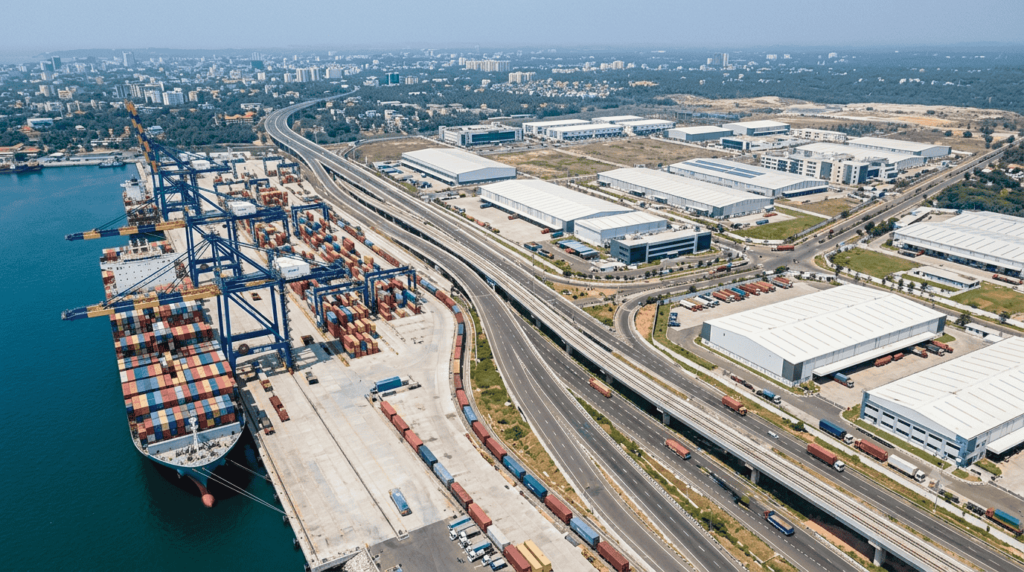
Port + Roads + Rail + CFS + Warehousing = More integrated logistics environment around Vizhinjam.
Conclusion
With the expansion of EXIM activities, connectivity of the hinterland of the Vizhinjam Port becomes a more important factor in the marine development of Kerala. The location of the port in close proximity to the main sea lanes creates a valuable maritime link, but effective transportation will be a key factor that will determine how easily cargo will move.
With the development of road, rail and logistics networks, the Vizhinjam Port may increasingly become linked to Kerala’s logistics infrastructure. Hence, businessmen, participating in international trade, should follow not only the port itself, but also the infrastructure under development.
For more news on ports of Kerala, maritime logistics, shipping and infrastructure development, Keralaport will provide up-to-date information. Follow Keralaport for more news about Vizhinjam Port, Kochi Port and other important maritime news from Kerala.