
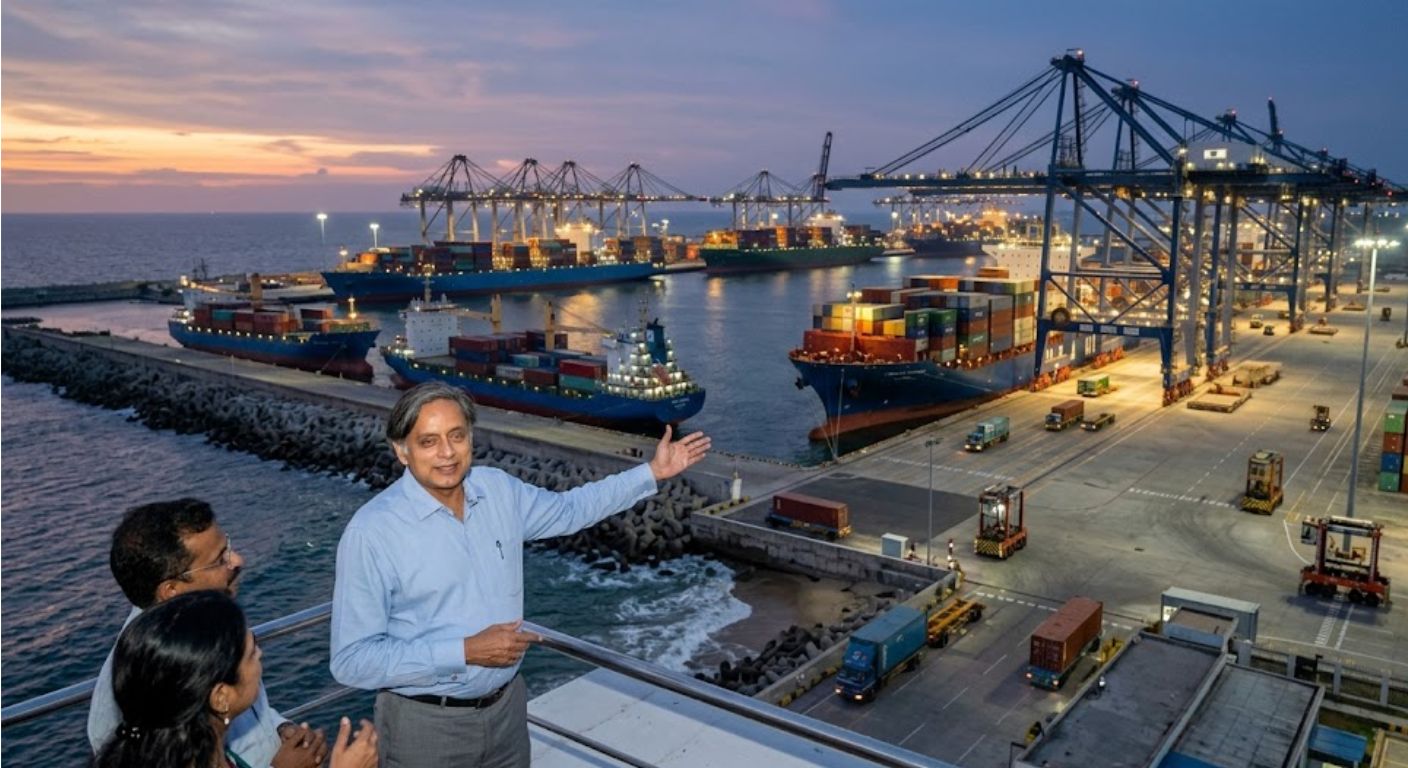
For the maritime industry in India, 2026 is proving to be memorable. One of the most discussed events in this regard relates to the activities being carried out at the Vizhinjam International Seaport.
The term “100 ships. One destination.” mentioned by Shashi Tharoor reflects the scale of what is taking place. More than 100 ships have been cited as being lined up to berth at the said port, and this constitutes an unparalleled event within India’s maritime history.
However, what led to all this? Why is Vizhinjam considered to be a game-changer for the international maritime community?
Want to stay ahead with the latest updates on ports, shipping, and infrastructure developments? Keralaport brings you real-time insights, expert analysis, and trending news that matter.
A Global Shipping Crisis Created an Opportunity
The increased flow of ships at Vizhinjam is no mere coincidence. It is deeply connected to the disturbances caused by one of the most crucial sea lanes in the world – the Strait of Hormuz.
With the political unrest in the area, many ships had no choice but to change their course and find other destinations. Here comes Vizhinjam, offering a strategic solution.
Recent news indicates that international shipping lines have begun targeting the coastal region of Kerala, causing an unexpected rise in shipping.
This situation brought about one thing for certain:
Vizhinjam is no longer just a regional port – it’s a global shipping destination.
Why Vizhinjam Port Stands Out
1. Strategic Location Advantage
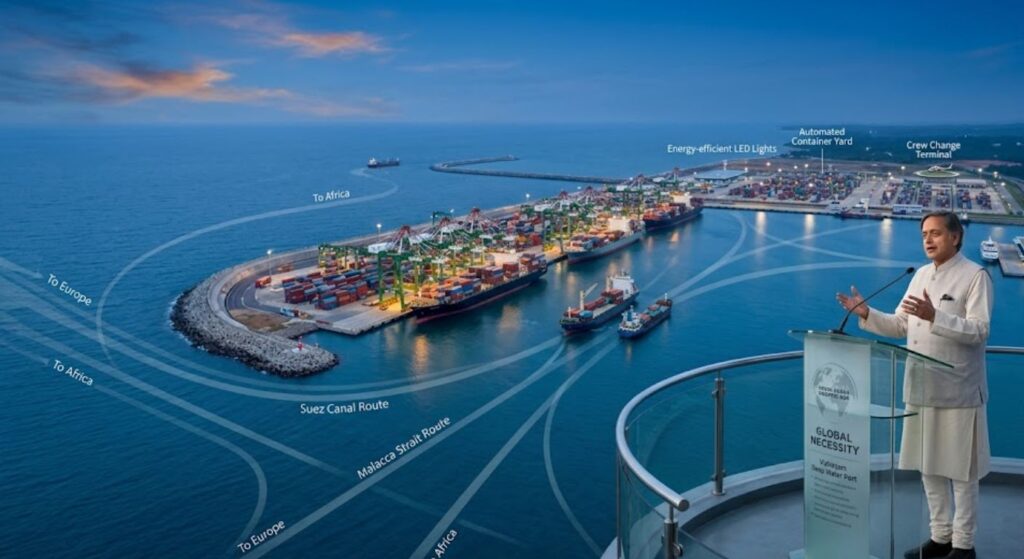
Vizhinjam is located just 10 nautical miles from a major international shipping lane, making it one of the most accessible ports for global cargo movement.
This reduces:
- Transit time
- Fuel costs
- Operational delays
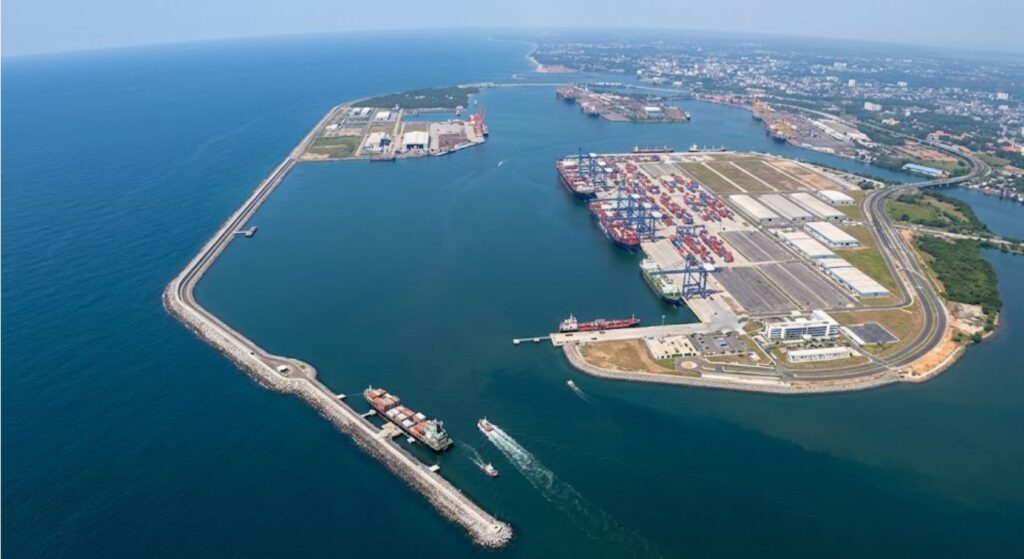
2. India’s First Deep-Water Transshipment Hub
Unlike many Indian ports, Vizhinjam is a natural deep-water port, meaning it can handle:
- Ultra-large container ships (ULCS)
- Mother vessels
This reduces India’s dependency on foreign ports like Colombo or Singapore for transshipment.
3. Rapid Growth in Record Time
- Handled 1 million TEUs in record time
- Managed 61 vessels in March 2026 alone
- Nearly 100 ships waiting or requesting access
Why Shashi Tharoor Calls It a “Global Necessity”
Shashi Tharoor described Vizhinjam as India’s “transshipment answer to the world” and even a “global necessity.”
This statement is not just political praise — it reflects a real shift in global trade patterns.
Here’s why:
1. Shift in Global Trade Routes
When traditional routes become unstable, the world looks for alternatives. Vizhinjam is emerging as that reliable alternative gateway.
2. Rising Demand for Transshipment Hubs
Global trade depends heavily on efficient container transfer points. Vizhinjam is now:
- Attracting international shipping lines
- Handling large-scale cargo movements
3. Reduced Dependency on Foreign Ports
India has long depended on ports like Colombo for transshipment. Vizhinjam changes that equation by bringing:
- Cost savings
- Faster turnaround
- Greater control over logistics
The Reality: Growth vs Capacity Challenges
While the “100 ships” moment is impressive, it also reveals an important challenge.
Vizhinjam is still under development.
Reports indicate that:
- The port had to decline additional ships due to capacity limits
- Existing infrastructure is handling more containers than planned capacity
This shows a classic case of demand exceeding supply.
What’s Being Done?
Phase 2 expansion is already underway:
- Increasing berth capacity
- Enabling 5 motherships simultaneously
- Improving rail and road connectivity
Impact on Kerala & India
The rise of Vizhinjam is not just about ships — it’s about transformation.
Economic Growth
- Boost in exports and imports
- Increase in foreign investment
- Creation of logistics hubs
Job Creation
- Direct employment in port operations
- Indirect jobs in transport, warehousing, and services
Global Recognition
Vizhinjam is now being discussed alongside major global ports, marking Kerala’s entry into the international maritime spotlight.
Related Insight: Kochi Outer Harbour Discussion
While Vizhinjam is currently leading the momentum, Kerala’s broader maritime vision also includes projects like the Kochi Outer Harbour.
For a deeper understanding of that discussion, you can explore this page: https://keralaports.com/kochis-maritime-dream-why-the-outer-harbour-project-is-back-in-the-news/
This article explains how Kochi’s outer harbour concept is being revisited in the context of rising global shipping demand and competition with emerging hubs like Vizhinjam.
How Keralaport Keeps You Updated
At Keralaport, we bring you the latest and most accurate updates on ports, maritime projects, and infrastructure developments across Kerala.
From breaking news like the 100 ships at Vizhinjam to in-depth analysis of upcoming port projects, our platform helps:
- Business owners
- Investors
- Logistics professionals
- Job seekers
Conclusion: The Birth of a Maritime Giant
The ‘100 ships at Vizhinjam’ phenomenon is far from being a mere headline, as it signifies change.
It signifies:
- The impact of infrastructure planning
- The significance of global positioning
- India’s future in its maritime sector
With the shifting nature of global trade routes, Vizhinjam Port no longer stands to catch up; it is now setting the trend.
And as appropriately noted by Mr. Shashi Tharoor, it is no longer a project.
Follow Keralaport today and never miss an important update shaping Kerala’s maritime future