
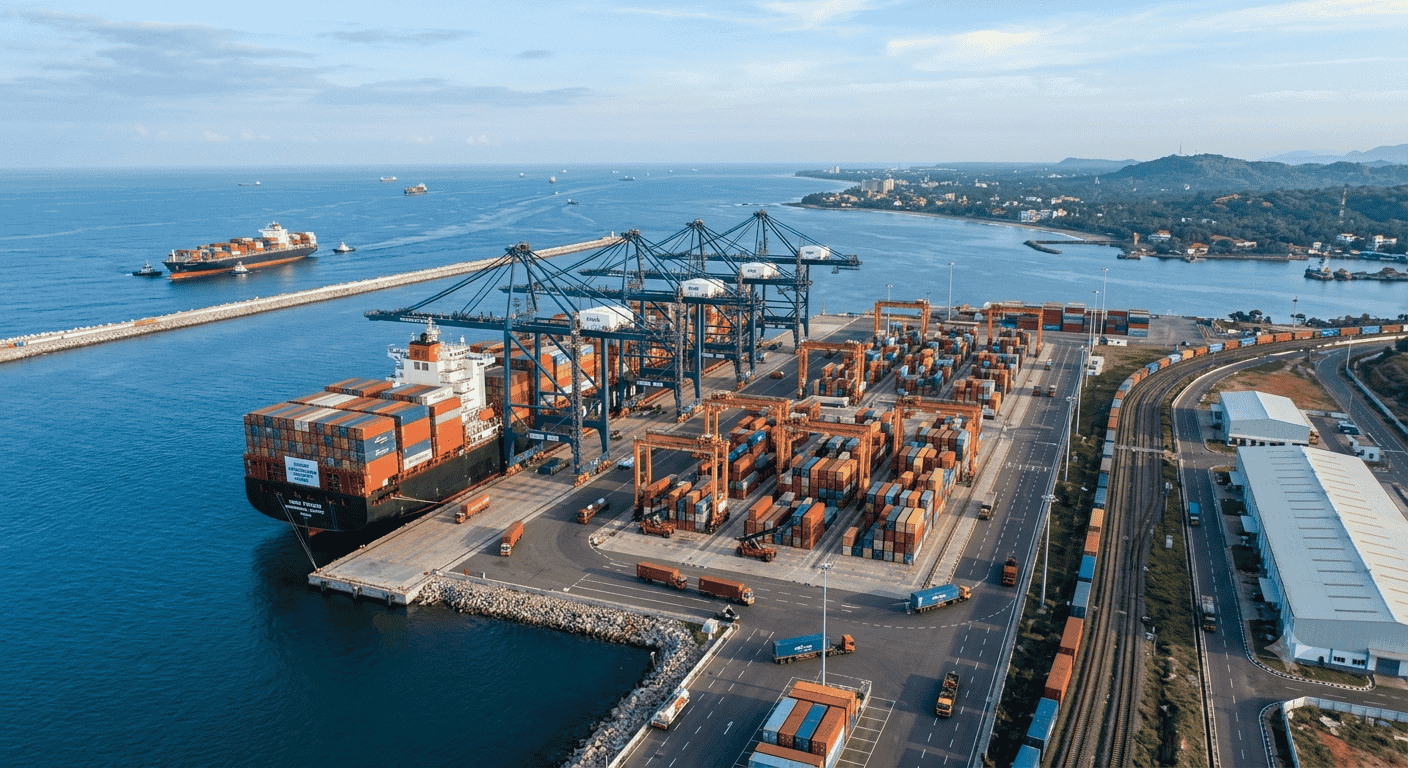
India is among those nations that have exhibited remarkable growth in economic status and the country owes its growth largely to the active participation of international trade activities. Nevertheless, a substantial part of India’s containerized cargo has been undergoing transshipment at foreign ports like Colombo, Singapore, and Dubai on its way to final destination.
The creation of Vizhinjam International Seaport in Kerala is a revolutionary move that is going to alter this trend. As a deep water transshipment port strategically placed close to one of the most busy international shipping lanes, Vizhinjam is set to become a key player in the Indian International Trade and Logistics Network. Built to be India’s first automated transshipment seaport of global standards, Vizhinjam is poised to enhance India’s standing in international maritime trade and create opportunities for exporters, importers, logistics firms, and industries in India.
Why Vizhinjam Port Is Strategically Important
Vizhinjam holds a distinct geographical position. It is just a few miles away from the East-West shipping channel used by international cargo vessels coming from Europe, the Middle East, Africa, and Asia. Thus, the large vessels can use this port for their docking without having to change course much.
Unlike many other ports in India, where dredging of the channel is needed to facilitate navigation, the natural depth at the port of Vizhinjam is around 20–24 metres. Consequently, this port can handle ultra-large container vessels and mother ships with a capacity of over 20,000 TEUs, which is not possible in most of the other ports in the vicinity.
This makes the international trade and logistics network of India more efficient.
Reducing India’s Dependence on Foreign Transshipment Ports
For several decades, a significant portion of container traffic handled by India has been shipped through other ports outside India before being delivered to their destinations.
This led to:
- Higher costs for logistics
- More time spent for shipment
- Extra expenses for handling
- Over-dependence on foreign ports
With the Vizhinjam Port, the problems above can be solved through direct international transshipment within the country. In this way, both Indian exporters and importers are able to benefit from reduced costs and greater supply chain reliability.
Ultimately, the goal is to keep a bigger share of the country’s container traffic in the country.
Strengthening India’s International Trade and Logistics Network
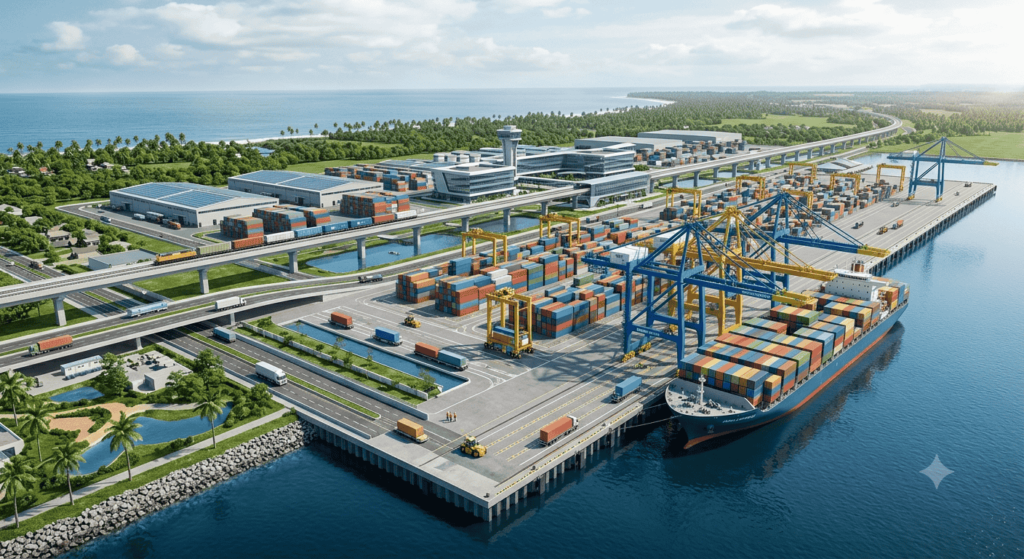
The development of the Vizhinjam port is not only limited to its functioning. It is built on the concept of an integrated logistics eco-system, which will cater to various sectors of industries.
Some of the developments are:
- Container trans-shipment terminal
- Cargo facilities for EXIM cargo
- Rail connections
- Highway connections
- Logistics parks
- Warehousing
- Customs support
- Multi-modal cargo handling
The port has collaborated with companies such as IOCL, CONCOR, and CWC to create state-of-the-art logistics facilities at the port. The future will bring a lot of investments and employment opportunities through these developments.
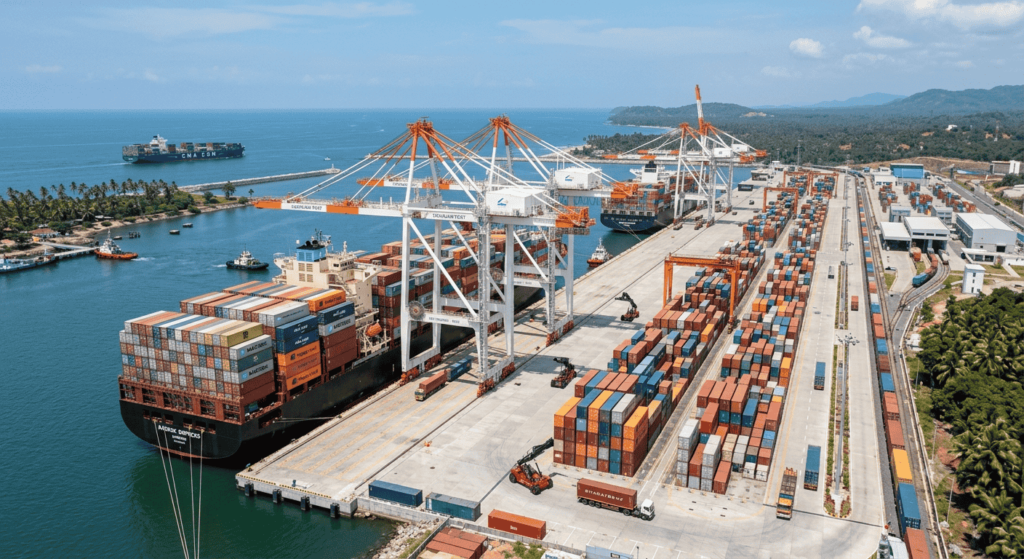
EXIM Operations Will Open a New Chapter
One of the most significant milestones for Vizhinjam is the commencement of full Export-Import (EXIM) operations.
With direct international cargo movement becoming operational, businesses across India will gain faster access to global markets while improving export competitiveness.
Benefits include:
- Faster export processing
- Reduced logistics expenses
- Improved customs efficiency
- Better supply chain visibility
- Greater opportunities for manufacturers
The launch of full EXIM services marks Vizhinjam’s evolution from primarily a transshipment terminal into a comprehensive international cargo gateway.
Modern Infrastructure Designed for the Future
Vizhinjam is one of India’s technologically most advanced ports.
Some of the main infrastructure strengths of this port are:
- Cargo automation systems
- Deep draft berths
- No need for dredging
- Ship-to-shore cranes
- Expandability in the future
- Sustainability of operations in the port
With increasing cargo, this will enable quick turnaround of vessels and efficient operations.
Driving Economic Growth Beyond Kerala
The impact of Vizhinjam extends well beyond Kerala.
The port is expected to stimulate growth in sectors such as:
- Manufacturing
- Export industries
- Warehousing
- Cold chain logistics
- Shipping
- Freight forwarding
- E-commerce logistics
- Industrial parks
The surrounding region is also witnessing plans for logistics hubs, industrial development, and improved transport infrastructure, reinforcing Vizhinjam’s role as a catalyst for regional economic growth.
Supporting the Vision of a Self-Reliant India
India’s maritime policy aims at lowering logistics costs while improving its domestic cargo handling capacity.
Vizhinjam contributes towards this through:
- Facilitating domestic transshipments
- Making exports more competitive
- Building robust supply chains
- Industrial development led by ports
- Globalizing India’s trade
With expansion in infrastructure, Vizhinjam can develop into one of the key gateways of the country.
Future Expansion Will Further Strengthen Trade
Development at Vizhinjam is far from complete.
Future expansion plans include:
- Increased container handling capacity
- Additional berths
- Expanded logistics zones
- Railway tunnel connectivity
- Industrial corridors
- Multi-modal transport integration
These projects will significantly improve India’s International Trade and Logistics Network, positioning the port among Asia’s leading maritime hubs.
Why Businesses Should Watch Vizhinjam Closely
Whether you are an exporter, importer, logistics company, shipping operator, investor, or manufacturer, Vizhinjam represents an important opportunity.
Potential advantages include:
- Lower transportation costs
- Faster international shipping
- Better cargo connectivity
- Improved logistics infrastructure
- Increased trade opportunities
- Enhanced supply chain efficiency
As more global shipping lines begin utilizing Vizhinjam, businesses can expect improved access to international markets.
Conclusion
Vizhinjam port is among the most revolutionary infrastructure projects in the maritime history of India. The strategic location, depth of water, state-of-the-art infrastructure, and developing logistics network make Vizhinjam a game-changer in India’s International Trade and Logistics network. By lowering dependency on foreign ports, enhancing export/import efficiency, and building an integrated logistics system, Vizhinjam port helps India become a more competitive player in the international maritime world.
Keralaports is the best resource for staying updated on the latest information on the subjects of ports, shipping, logistics, and maritime infrastructure.