
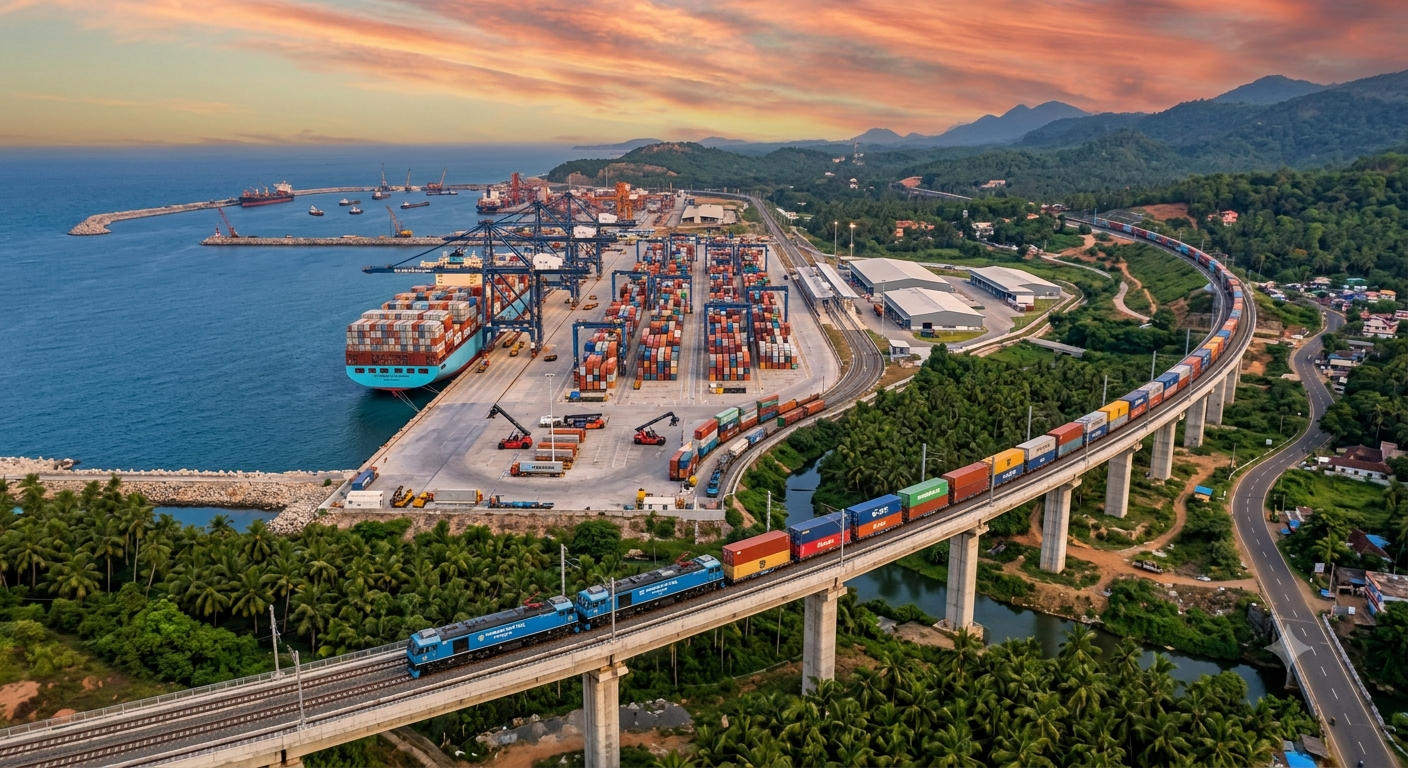
The infrastructure scenario in the state of Kerala is witnessing unprecedented change in the year 2026, and the rail network connecting Vizhinjam International Seaport has a special significance in this respect. While the seaport has already become the talk of the town among many of the best maritime projects in India, it is also agreed by many that its success would largely depend upon an efficient rail transport network.
What was once regarded as yet another transport project is now a major economic venture for the state of Kerala, which seeks to emerge as an international logistics and business hub.
At Keralaport, we continuously track and publish the latest updates related to Kerala ports, shipping, logistics, rail connectivity, and maritime infrastructure developments.
The Growing Importance of Vizhinjam Port
The Vizhinjam International Seaport is considered to be the first deep-water transshipment port in India that has the capacity to accommodate huge cargo vessels. The strategic positioning of the port with respect to major international maritime routes has drawn the attention of many international players.
At present, the Government of Kerala and Port Authorities have decided to improve the infrastructure facilities available in the vicinity of the Vizhinjam port by developing better road and rail connections.
As per the latest reports, the state has concluded logistics deals worth ₹2,000 crores with major public sector undertakings for establishing warehouses, bunkering terminals, and logistics zones in and around the port area.
Why Rail Connectivity Matters More Than Ever
A port will not be able to work efficiently with road transport alone. With an increase in container shipments, complete reliance on road transport means congestion, pollution, and high logistical costs.
Here lies the importance of the rail connectivity project for Vizhinjam.
It is believed that the rail connectivity project between Balaramapuram and Vizhinjam would facilitate the linking of the port to India’s rail freight infrastructure. Thus, containers shipped to Vizhinjam would be able to easily move from there across India without congesting Kerala’s roads.
The rail connectivity project may prove helpful in improving:
- Cargo shipment efficiency
- Import/Export operations
- Industries
- Investment in logistics
- Competitiveness in trade
Most importantly, it would help Kerala compete with the international transshipment centers of Colombo and Dubai.
Latest 2026 Update: KRCL Floats Tender for Rail Tunnel Project
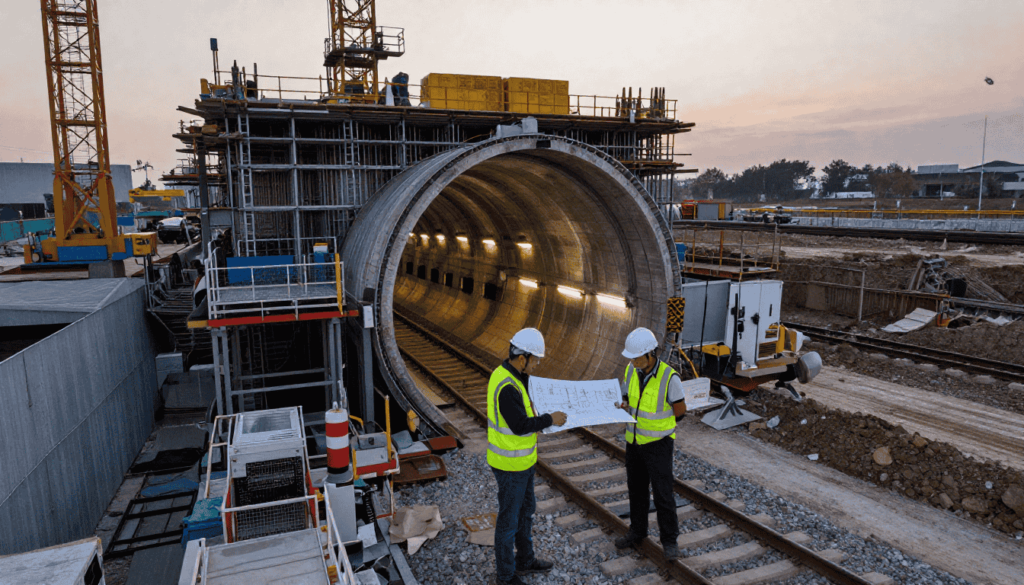
One of the biggest infrastructure developments in 2026 came when Konkan Railway Corporation Limited officially floated the tender for the Vizhinjam rail tunnel project.
The project includes:
- A nearly 9 km underground rail tunnel
- Broad-gauge single-line railway connection
- Civil, electrical, and signaling systems
- Integration with the national railway network
The estimated cost is around ₹913 crore, and the project is expected to be completed within 36 months after execution begins.
This is considered a major milestone because the project had faced delays for years due to environmental clearances, land acquisition concerns, and technical challenges.

One of India’s Most Ambitious Rail Tunnel Projects
The Vizhinjam rail corridor is not an ordinary railway line.
A large section of the route is planned underground because of Kerala’s dense population and difficult terrain. Earlier reports described the corridor as one of India’s longest underground railway connectivity projects linked to a seaport.
This engineering approach aims to:
- Reduce displacement of residents
- Protect environmentally sensitive zones
- Improve operational efficiency
- Enable uninterrupted freight movement
The underground model also minimizes traffic impact on nearby urban regions.
Boosting Kerala’s Logistics Economy
The rail project is expected to become a major catalyst for Kerala’s logistics economy.
With direct rail connectivity, Vizhinjam can support:
- Inland Container Depots (ICDs)
- Multi-modal logistics parks
- Warehousing hubs
- Export processing zones
- Industrial corridors
Recent government agreements involving CONCOR and other PSUs clearly show that Kerala is preparing for a large-scale logistics ecosystem around the port.
This could create thousands of jobs in:
- Shipping
- Warehousing
- Supply chain management
- Transportation
- Manufacturing
- Port operations
Reducing Traffic Congestion in Kerala
The traffic relief provided by the rail project is one of its most notable strengths.
For instance, the movement of bulky containers to and from Kerala relies heavily on road networks. The growth of activities at Vizhinjam might result in an increase in truck traffic on NH66.
Use of rail transport would result in the following reductions:
- Congestion of roads
- Use of fuel
- Delays in transportation process
- Greenhouse gas emission
The importance of the rail network has been mentioned in various infrastructure reports.
Supporting Future Infrastructure Projects
The Vizhinjam rail connectivity project is also connected to several other infrastructure developments happening in Kerala.
These include:
- Outer Ring Road (ORR) project
- Port-based industrial zones
- Logistics parks
- Coastal economic corridors
- Road expansion projects
Environmental studies for the Outer Ring Road have already proposed multiple tunnels and viaducts to improve access between Vizhinjam and northern regions of Kerala.
Together, these projects indicate that Kerala is planning a long-term integrated logistics and transportation network.
Public Expectations and Economic Impact
The discourse around Vizhinjam has gained momentum in recent months. The online debate among Kerala communities sees the project being hailed as a ‘game changer‘ for the economic fortunes of the state, provided industrialization increases around the port area.
It is widely perceived that success for Vizhinjam would not be determined just through port activities, but how effectively Kerala can develop its infrastructure around railways, logistics facilities, and industry clusters.
This is precisely the reason why railway connectivity is the number one priority of Kerala infrastructure in 2026.
Conclusion
Vizhinjam Port has already established the presence of Kerala in the international shipping world map. However, the success in the coming years will hinge upon the capability of Kerala to integrate the port into the overall national logistics chain.
The Vizhinjam rail connectivity project is not just a railway corridor but is much beyond. The project is at the heart of the plan that has been envisaged by the authorities for future business, logistics, and industry in Kerala.
For the latest updates on Kerala ports, maritime projects, shipping infrastructure, logistics developments, and airport news, follow Keralaport.