
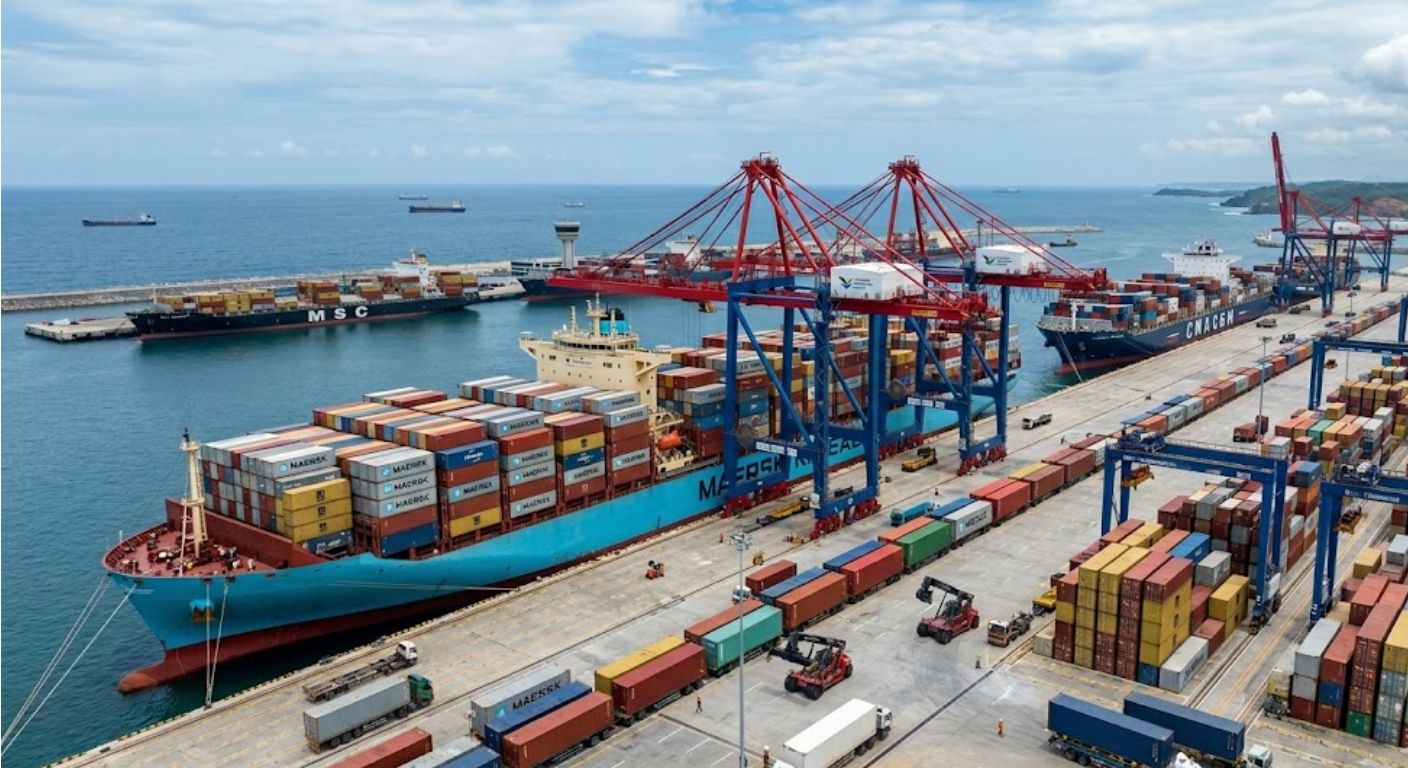
The world’s shipping industry is currently undergoing a difficult phase in recent years due to the prevailing tension surrounding the Strait of Hormuz, which has adversely impacted the international maritime routes. In this scenario, the Vizhinjam International Seaport has quickly developed as a vital alternative port facility for international cargo operations.
In light of the current situation, the number of ships from various international shipping agencies has increased significantly at Vizhinjam Port. As per industrial estimates, close to 100 ships from different international shipping agencies have either queued for berthing or sought entry at the port facility due to the current Hormuz problem.
This unprecedented increase in maritime operations has quickly elevated the deep-water port project of Kerala to international prominence.
Stay updated with the latest news and developments from Kerala’s ports, airports, shipping, and logistics industry through Keralaports
Understanding the Strait of Hormuz Crisis
The Strait of Hormuz has always been a crucial international passage linking the Persian Gulf with the Arabian Sea. Large quantities of cargo, oil, and liquefied natural gas (LNG) transportation occur each day through the strait.
But increasing geopolitical instability in the Gulf region has created some problems like interruptions, insecurity, delays, and high insurance costs. It has been observed that many countries in the region have started reducing their shipping activities due to such problems.
This situation created problems for the transportation of cargo through the Hormuz passage and made the shipping companies consider routes from ports capable of taking mother ships efficiently. And this became the time when Vizhinjam Port got into the limelight.
Why Vizhinjam Port Became a Preferred Alternative
Located just around 10 nautical miles from the major international east-west shipping corridor, Vizhinjam enjoys one of the best maritime positions in South Asia. Unlike many Indian ports that require ships to travel deep into the coastline, Vizhinjam offers direct accessibility with minimal deviation from global shipping routes.
Another major advantage is its natural deep draft. The port can accommodate ultra-large container vessels without extensive dredging, making it highly attractive for global shipping companies.
Some key advantages of Vizhinjam Port include:
- Deep natural draft for large mother ships
- Proximity to international shipping lanes
- Faster turnaround time
- Reduced fuel consumption for vessels
- Lower operational costs compared to distant ports
- Strategic location for transshipment operations
These strengths became even more valuable during the Hormuz crisis, where shipping companies needed safe and efficient alternatives immediately.
Surge in Global Cargo Traffic
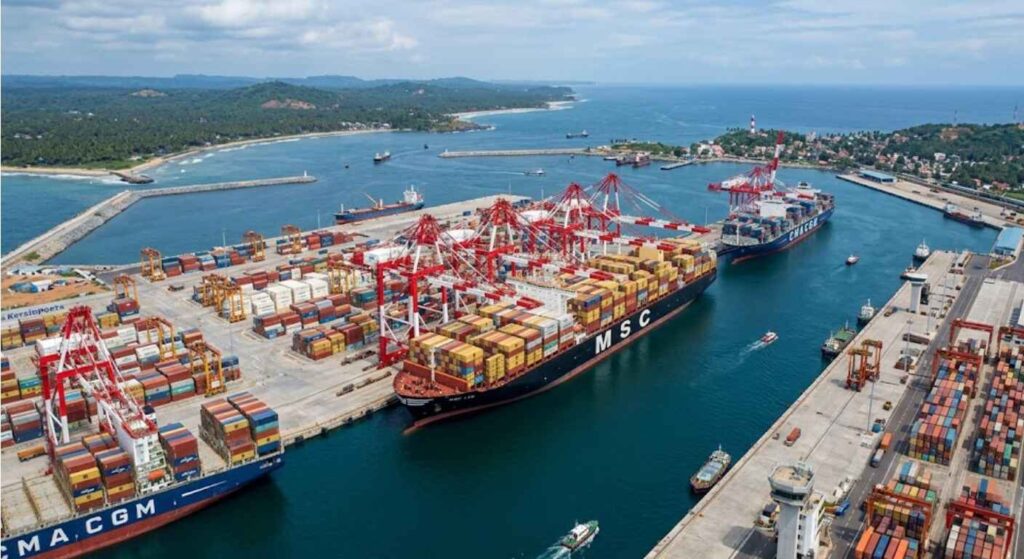
Recent reports revealed that approximately 100 ships from multiple global shipping companies were waiting for berthing opportunities at Vizhinjam Port.
The surge mainly includes vessels operating between:
- Europe
- China
- Singapore
- South America
- Middle Eastern trade corridors
Because of disruptions near the Gulf region, several shipping lines redirected cargo movement through alternative hubs, and Vizhinjam emerged as one of the biggest beneficiaries.
According to reports, the port’s current infrastructure is operating near capacity due to the unexpected increase in global demand.
This development clearly demonstrates how geopolitical events can suddenly reshape global logistics and maritime trade patterns.
Global Recognition for Kerala’s Maritime Infrastructure
The sudden international attention on Vizhinjam Port has also become a matter of pride for Kerala’s infrastructure development sector.
Prominent political leaders and maritime analysts highlighted how the port is transforming into India’s “transshipment answer to the world.”
The port’s growing role shows that India is gradually strengthening its position in global maritime logistics, reducing dependence on foreign transshipment hubs such as:
- Colombo
- Dubai
- Singapore
For decades, a significant portion of Indian cargo depended on foreign ports for transshipment services. Vizhinjam now has the potential to change that equation dramatically.
Challenges Despite the Growth
Despite all this, there is still a bright side of the picture since the increase in traffic is seen as an excellent indicator by other experts as well. The current problems faced by the project include the following:
- Lack of berthing space
- Need for logistics areas and warehouses
- Insufficient cargo capabilities
- Development of rail and road connectivity.
As per reports, there is work going on in terms of warehouse and gateway cargo capabilities of the port, which could prove to be an obstacle in its expansion. In addition to all this, the current stage of development of the port has the ability to service a particular number of ships at one time, so in essence, the port cannot capitalize on the current boom in shipping activity.
However, plans to expand the port already exist.
Economic Impact on Kerala
The rise of Vizhinjam Port is expected to create substantial economic opportunities for Kerala.
Potential benefits include:
- Increased foreign investment
- Growth in logistics and warehousing industries
- Job creation
- Export-import business expansion
- Tourism and cruise industry growth
- Development of supporting industrial zones
As global cargo traffic increases, Kerala could emerge as a leading maritime and logistics destination in India.
The Hormuz crisis may have accelerated this transformation, but the long-term potential of Vizhinjam extends far beyond temporary geopolitical disruptions.
The Future of Vizhinjam Port
The present scenario has demonstrated one critical truth that strategic maritime infrastructure can rapidly change the dynamics of global trade.
Should the growth projects, connectivity, and industrial ecosystem be carried out at the same rate, Vizhinjam Port may emerge as one of the most significant transshipment ports in Asia.
According to experts, the success of the port in the coming years would largely depend on the following factors:
- Infrastructure development
- Logistics parks
- Railway connectivity
- Cargo integration
- Customs and gateway cargo handling
Given the existing enthusiasm among international shipping organizations, the global significance of Vizhinjam Port is bound to increase in the coming years.
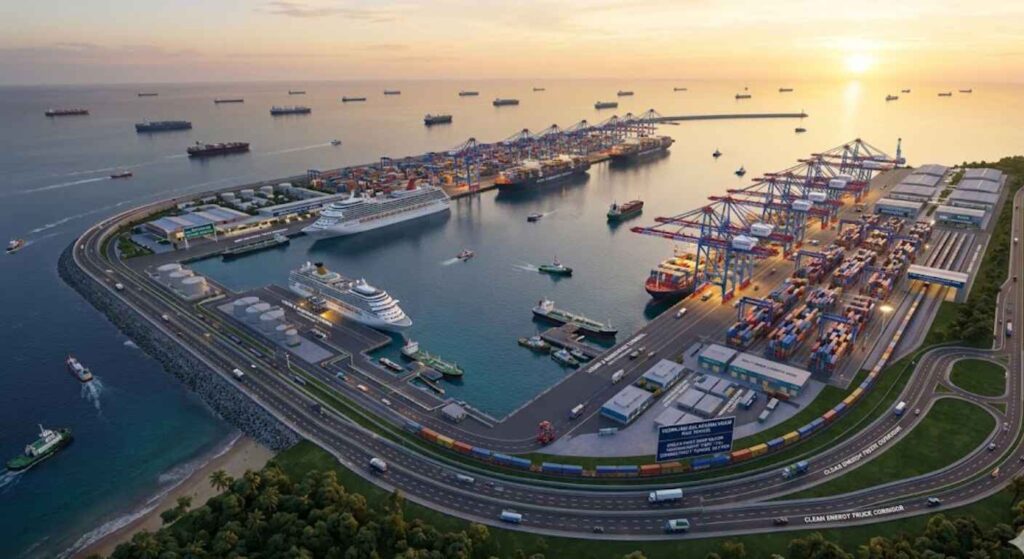
Stay Updated with Keralaport
As Kerala’s maritime industry evolves rapidly, staying updated with the latest developments becomes more important than ever.
Keralaport helps readers stay informed about:
- Latest port news
- Shipping industry updates
- Maritime infrastructure developments
- Kerala airport and port projects
- Logistics and cargo industry trends
Whether you are a business owner, logistics professional, shipping enthusiast, or investor, Keralaport delivers timely updates and insights from Kerala’s growing maritime ecosystem.
Conclusion
The present Hormuz crisis has inadvertently brought out the significance of Vizhinjam Port at the global level. With shipping lines around the world facing disruption, Kerala has become an ideal location due to the availability of its deep-water port for handling global shipments.
Despite problems with infrastructure facilities, the sudden influx of vessels clearly indicates that Vizhinjam is well-positioned to establish itself as a global gateway in the coming years.
It would not be surprising if, with adequate development, Kerala became one of India’s leading ports for global shipping.
Follow Keralaports for real-time updates, industry insights, and the latest trends shaping Kerala’s maritime and aviation sectors.