
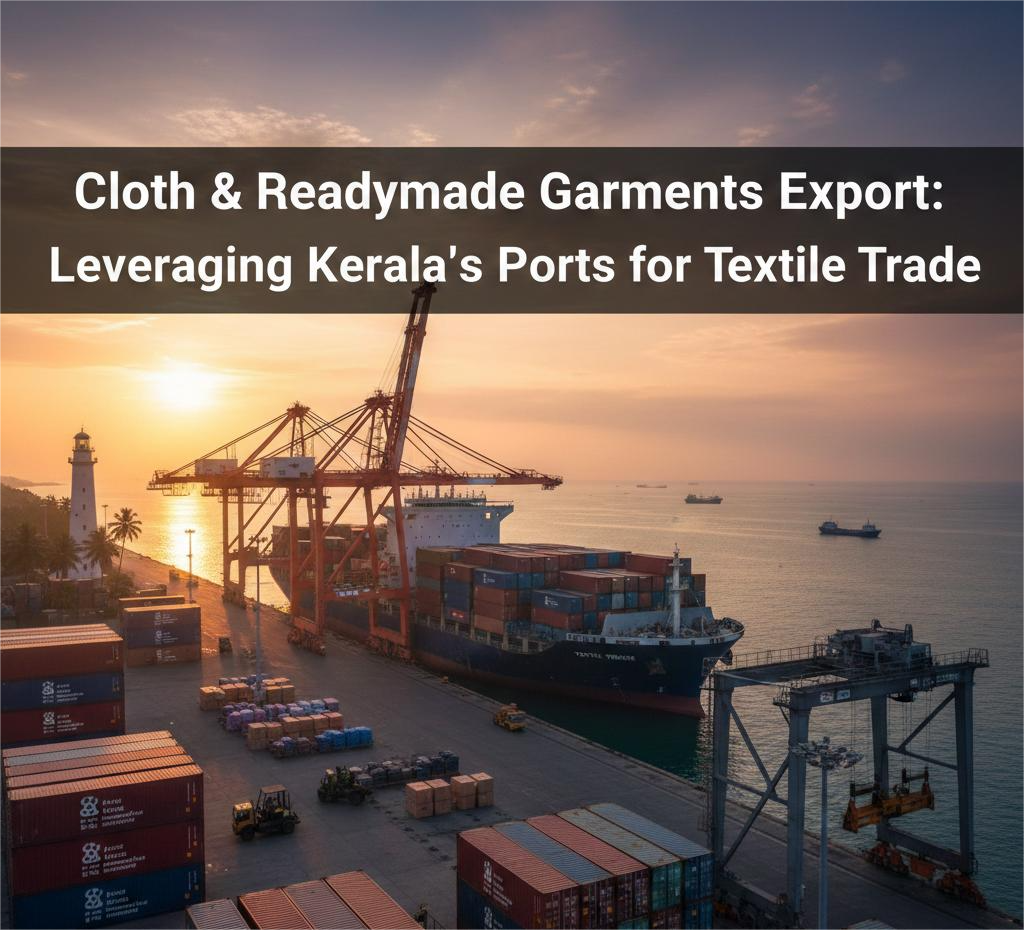
Kerala, with its long coastline and burgeoning maritime infrastructure, is on the cusp of a major transformation. While the state is traditionally known for exporting spices, coir, and marine products, a significant opportunity lies in boosting the export of cloth and readymade garments (RMG) by fully leveraging its rapidly modernizing ports: Kochi, Vizhinjam, and Azhikkal.
The textile industry in India is a global powerhouse, and by optimizing logistics through its ports, Kerala can carve out a much larger share of this lucrative market, especially for value-added products and specialized apparel.
The Triple Advantage: Kerala’s Port Ecosystem
Kerala is unique in having three strategic ports that, when fully operational, offer distinct advantages for the textile trade:
1. Kochi Port (The Established Hub)
Kochi, home to the Vallarpadam International Container Transshipment Terminal (ICTT), is the operational backbone. It is already well-connected to major global shipping lanes and is currently the primary gateway for Kerala’s diverse exports, including the existing textile trade.
- Advantage: Established connectivity, modern facilities, and existing rail/road links to major textile clusters in Tamil Nadu (like Tirupur and Coimbatore), providing a vital outlet for South India’s manufacturing output.
Read More About Kochi Port: https://keralaports.com/our-services/cochin-port-kochi-port-kerala-india/
2. Vizhinjam International Seaport (The Deepwater Game-Changer)
Vizhinjam, near Thiruvananthapuram, is a deepwater transshipment port designed to handle Ultra Large Container Vessels (ULCVs)—ships that cannot dock at many other Indian ports.
- Advantage: Its strategic location, just 10 nautical miles from the international east-west shipping route, means faster transit times and reduced logistics costs by eliminating the need to transship cargo at foreign ports like Colombo or Singapore. For time-sensitive fashion and RMG exports, this speed is invaluable.
Read More About Vizhinjam Port: https://keralaports.com/our-services/vizhinjam/
Job Opportunities in Vizhinjam Port: https://keralaports.com/vizhinjam-port-keralas-gateway-to-global-trade-is-a-job-gateway-too/
3. Azhikkal Port (The Malabar Gateway)
Azhikkal, in North Kerala’s Kannur district, is being developed to handle Panamax-sized container ships. It is poised to become a significant regional hub for the Malabar region and attract cargo from the adjacent hinterlands of Karnataka.
- Advantage: Provides a direct, closer access point for textile units located in North Kerala and Southern Karnataka, reducing long-distance road transport and offering a decentralized logistics solution.
Read More About Azhikkal Port: https://keralaports.com/azhikkal-port-keralas-gateway-to-the-future/
Opportunities for the Readymade Garment Sector
For the readymade garment (RMG) sector, which is highly competitive and relies on efficient supply chains, Kerala’s port development addresses several critical weaknesses:
- Cost & Time Reduction: By reducing reliance on foreign transshipment and providing deeper drafts, Vizhinjam promises to cut logistics costs and transit times, making Kerala’s textile exporters more competitive against rivals in Bangladesh and Vietnam.
- Specialized Manufacturing Clusters: Port-led industrial development around Vizhinjam and Azhikkal can lead to the creation of Special Economic Zones (SEZs) and manufacturing clusters. These zones could specifically target high-value textile and technical apparel production, attracting crucial investment.
- Sustainability Focus: Kerala’s strong reputation for sustainability can be leveraged by encouraging green-certified garment manufacturing near the ports, catering to the growing global demand for ethically and sustainably sourced apparel.
- Diaspora and Market Access: The state’s large global diaspora provides established trade links and market knowledge, particularly in the Middle East and Europe, which are major destinations for Indian textiles.